Waterproofing Washes and Granulation: Pigment Choice and Technique
Waterproofing Washes and Granulation: Pigment Choice and Technique
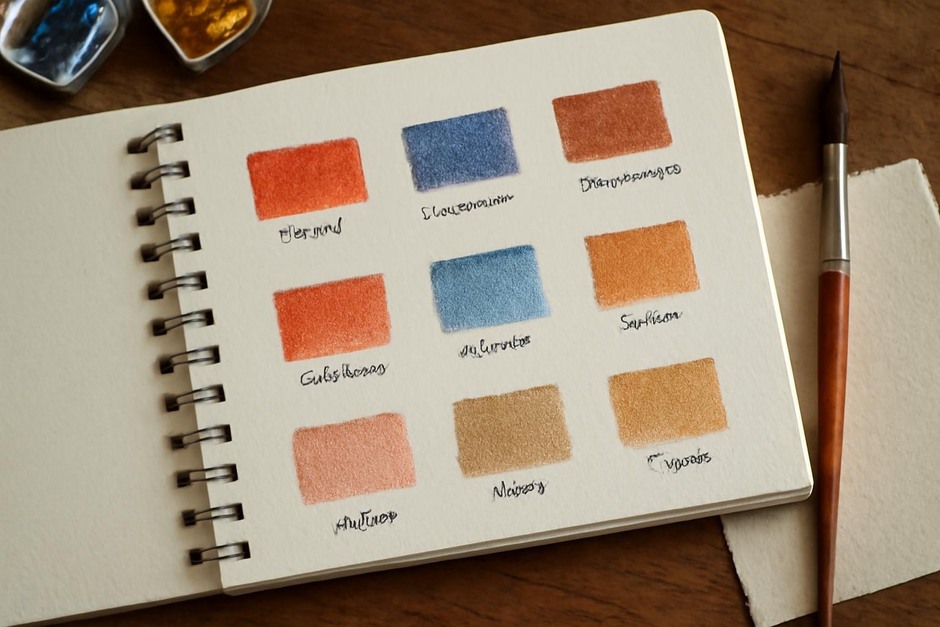
This note looks at how sealing a wash and choosing pigments with differing particle sizes influence granulation and surface texture. Granulation can be a desirable effect for certain atmospheres and textural studies, but it can also obscure delicate transitions. The tests below compare waterproof inks and granulating watercolour pigments and observe how technique mediates their behaviour.
Materials and test plan
- Two pigments known for granulation and one smooth, staining pigment.
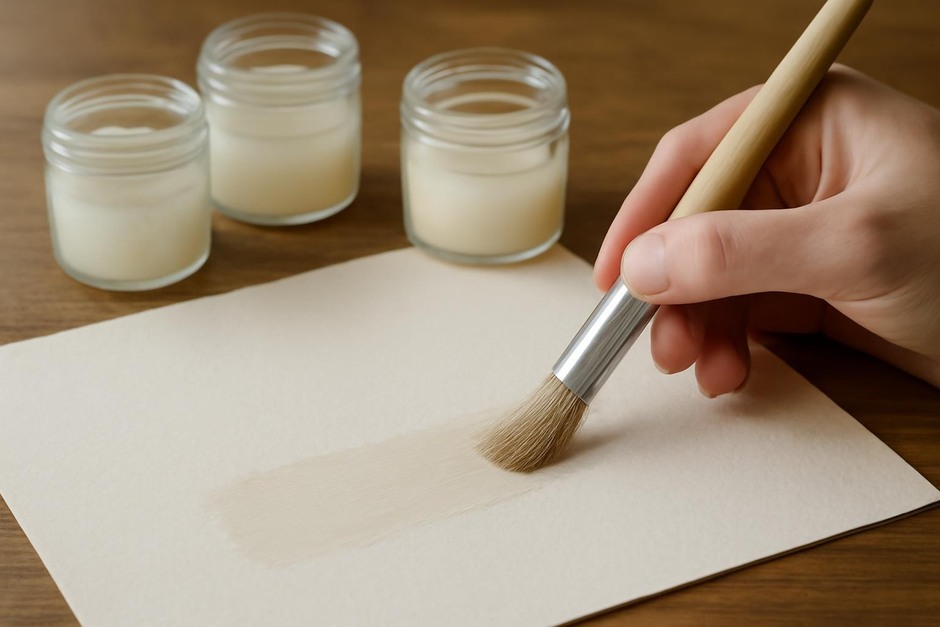
- Waterproof drawing ink applied as a base on some panels, then overpainted with watercolour tests.
- Paper: rough and medium grain to observe interaction with granulation.
Each panel received washes under three conditions: over an ink base, over a dry unsealed base, and directly on untreated paper.
Granulation and particle size
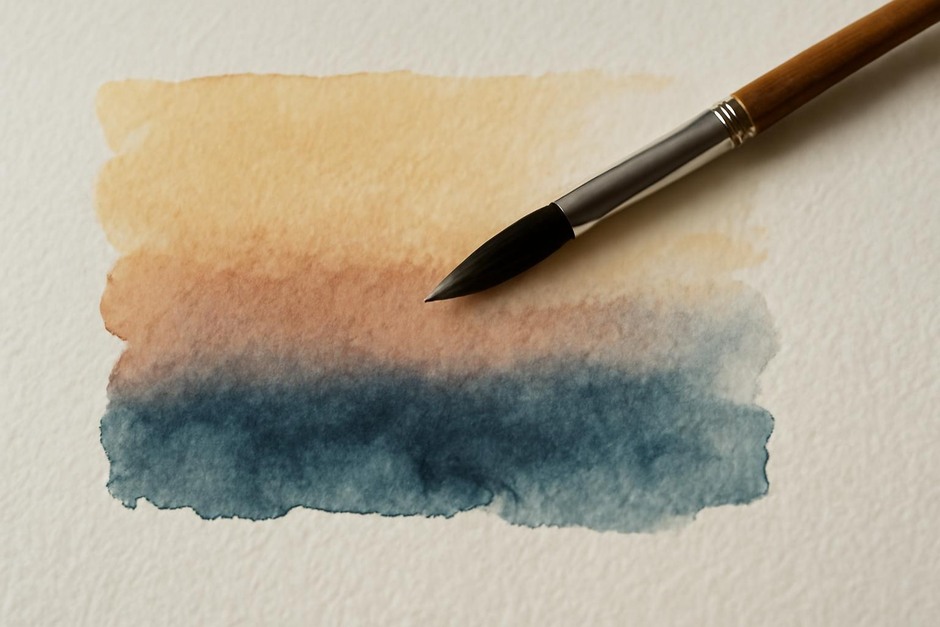
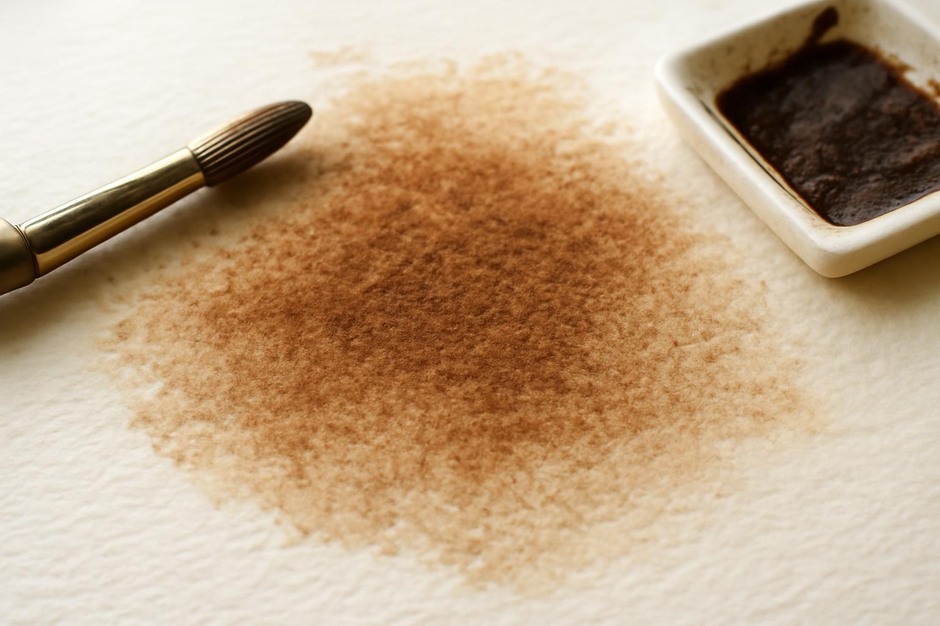
Granulating pigments contain larger or denser particles that settle into the paper structure differently than finer, staining pigments. On rough paper, these pigments visibly collect in the valleys of the texture, creating speckled, directional fields. On smoother paper the granulation is subtler, but still present when pigment particles are large enough.
Effects of waterproof bases
A waterproof ink base changes the receiving surface. Where the ink forms a continuous film, watercolour pigments that would normally be absorbed into the fibre are instead forced to aggregate on the surface. This can enhance granulation and make edges crisper, but it also reduces the ability to lift or blend the watercolour with a damp brush. If the goal is a granular field that sits boldly on top of the picture plane, painting over a waterproof base helps achieve that effect.
On the other hand, painting granulating pigments over a dry unsealed base yields more integrated textures because the particles can partially sink into the paper. The result is a softer, more embedded granulation that interacts with earlier layers.
Technique and control
Application speed and brush loading strongly affect granulation visibility. A quick, heavily loaded wash tends to carry more of the granular particles in suspension and can leave a more uniform film. A slower, thinner wash allows particles to settle and exhibit stronger granulation. Tilt and blotting also direct where particles settle; tilting the paper while drying encourages pooling along edges and into lower areas.
Practical suggestions
- Use waterproof underlayers when you want granulation to sit cleanly above previous passages and avoid lifting.
- To integrate granulation with the paper, apply pigments to untreated or only lightly sized surfaces, and use dilute washes with controlled tilt.
- For experimental texture, combine granulating pigments with controlled blotting and directional drying to emphasize sedimentary effects.
Granulation is a feature of certain pigments and particle behaviours. It can be accentuated by film-forming underlayers and moderated by paper choice and wash dilution. These experiments show that technique and surface matter as much as the pigment itself; small changes yield different textures. Working with intention rather than surprise tends to produce the most repeatable results.